Slow Down and Play: Why Cozy Games Are Winning Over Millions of Burned-Out Gamers
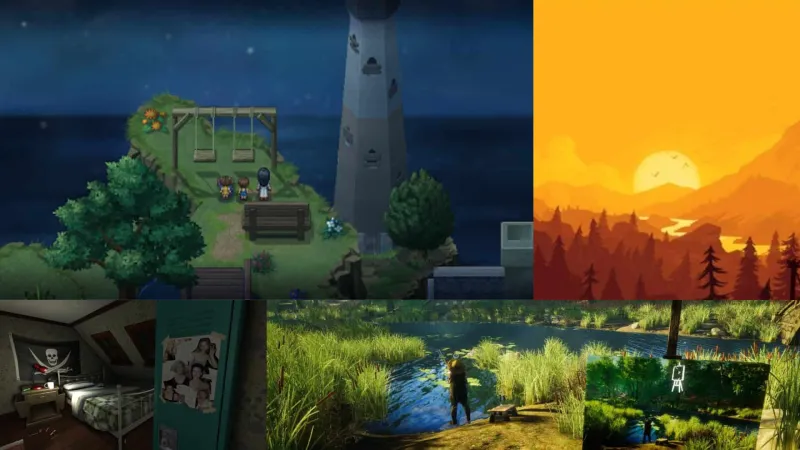
Photo: cozy indie game colorful cottage garden peaceful gaming aesthetic, via thecozygamingnook.com
Not every game needs a kill-death ratio. That sounds obvious when you say it out loud, but for a long time, the loudest voices in gaming culture acted like it did. Competitive shooters, ranked ladders, and hardcore progression systems dominated the conversation — and for a lot of players, that noise got exhausting.
Enter the cozy game. Low stakes, high heart, and increasingly, high sales.
Games like Stardew Valley, A Short Hike, Unpacking, Spiritfarer, and Venba have collectively reached tens of millions of players without a single kill streak or matchmaking queue. They offer something different: a space to breathe, explore, and feel something without the pressure of performance. And the audience for that experience turns out to be enormous.
What Even Is a Cozy Game?
The term is slippery, which is part of what makes it interesting. Ask five developers and you'll get five slightly different answers. But the core characteristics tend to cluster around a few ideas: low or no failure states, an emphasis on atmosphere and narrative, pacing that respects the player's time, and emotional themes that lean toward warmth rather than tension.
Walking simulators, wholesome RPGs, farming sims, narrative puzzle games — they all fall somewhere under the cozy umbrella. What unites them is a design philosophy that treats relaxation and reflection as valid goals, not consolation prizes for players who can't handle a challenge.
"We never thought of Unpacking as a 'cozy game' when we were making it," says Wren Briggs, an indie developer who has followed the genre closely since the title's breakout success. "We just thought of it as a game about a feeling. The category caught up to what players were already responding to."
That's a pattern you hear repeatedly in this space. Developers weren't chasing a trend — they were making something honest, and audiences found them.
The Burnout Factor
Timing matters. The cozy game boom accelerated significantly during and after the pandemic years, when a lot of people found themselves craving escape that didn't add more stress to their lives. Animal Crossing: New Horizons became a cultural phenomenon in early 2020 for exactly this reason — it offered a gentle, controllable world when the real one felt completely out of hand.
But the underlying conditions were already building. Competitive multiplayer had been getting more intense, more time-demanding, and frankly more toxic for years. The psychological cost of ranked play — the rage, the anxiety, the hours lost to a bad session — had started to push a meaningful segment of players toward something gentler.
This isn't a knock on competitive games. Plenty of people love them and always will. But the market is bigger than that audience, and cozy games are proof.
"I played shooters for years and hit a wall," says Jamie Torres, a 28-year-old from Austin who now considers herself primarily a cozy gamer. "I still love games, but I don't have the energy for ranked anymore. Finding games that just let me exist in a world without punishing me for it felt like discovering a whole new hobby."
Jamie's experience is far from unique. Gaming forums and communities are full of similar stories — longtime players rediscovering their love of games through titles that meet them where they are.
Indie Developers as Emotional Architects
What's striking about the cozy game space is how much of it is driven by tiny teams — sometimes a single developer — working with relatively modest budgets and enormous creative freedom. That freedom shows.
Without the pressure to justify a $70 price point or satisfy a publisher's quarterly targets, indie developers in this space can take real risks with subject matter. Spiritfarer deals with grief and death. Venba explores immigrant identity and cultural memory through cooking. A Short Hike is about the simple pleasure of wandering without a destination. These aren't themes you typically see greenlit in a boardroom.
Developer Sable Nguyen, who released a cozy narrative game about a family recipe book last year, describes the creative process as almost therapeutic. "I made the game I needed to play. I wasn't thinking about market research. I was thinking about my grandmother's kitchen and how I wanted to hold onto that feeling somehow. The fact that other people connected with it still blows my mind."
That authenticity resonates. Players can feel when something was made with genuine care versus when it was engineered to hit demographic checkboxes.
The Numbers That Have Publishers Nervous
For a long time, major publishers could safely ignore cozy games as a niche. That's getting harder to do.
Stardew Valley has sold over 30 million copies. A Short Hike — a game made by one person — has hundreds of thousands of glowing reviews on Steam. The collective sales figures for wholesome and narrative-focused indie titles represent a market segment worth hundreds of millions of dollars annually, and it's growing.
Publishers have noticed. There's been a visible scramble to understand and capitalize on this audience — through acquisitions, internal studio pivots, and publishing deals with established cozy game developers. The results have been mixed. A cozy aesthetic slapped onto a game with aggressive monetization underneath doesn't fool anyone, and the community is quick to call it out.
The challenge for big studios is that cozy games succeed largely because of what they don't do — no battle passes, no FOMO mechanics, no endless grind. That's a hard sell to a business model built on recurring revenue.
What This Means for Gaming Culture
The rise of cozy games is doing something bigger than just creating a new genre category. It's expanding the cultural definition of what a gamer is.
Players who would never have identified with gaming five years ago are now buying Switches and building Steam wishlists full of narrative indie titles. They're joining Discord servers, writing fan fiction, and creating communities around games that ask them to feel rather than compete. That's new territory.
For the hardcore gaming community, the reaction has been mixed — some embrace the expansion, others feel like their space is being diluted. But the honest answer is that a bigger tent is good for everyone. More players means more money flowing into the industry, more experimental titles getting funded, and more diverse voices at the development table.
Cozy games didn't just find an underserved audience. They reminded a lot of people why they fell in love with games in the first place — that sense of entering a world that feels like it was made just for you.
That's not a niche. That's something pretty fundamental to why games matter at all.