48 Hours to Ship: How Game Jams Became the Indie World's Most Powerful Launch Pad
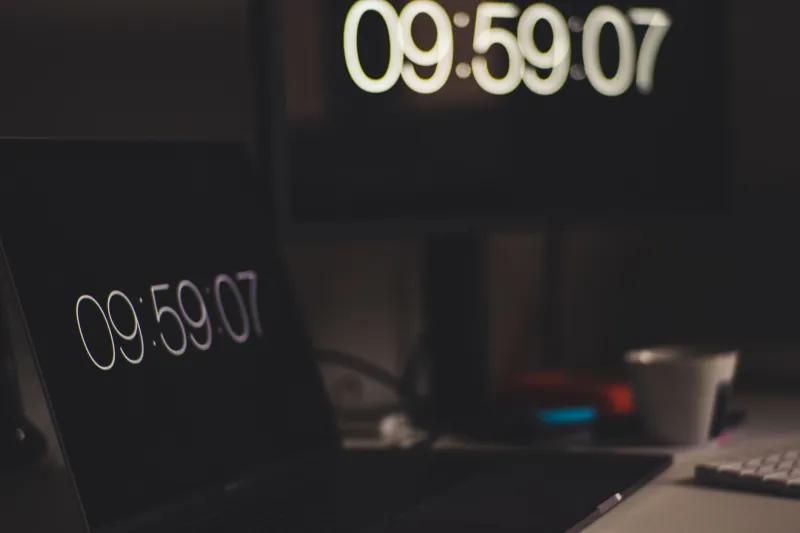
Somewhere right now, a developer is staring at a blank screen with 46 hours left on a countdown timer, a theme they didn't expect, and absolutely no plan. By Sunday night, they'll have something playable. Maybe something brilliant. Maybe something that ends up on Steam two years later with a thousand reviews and a dedicated Discord server.
That's the strange, beautiful chaos of the game jam — and it's quietly become one of the most important forces in independent game development.
The Pressure Cooker Nobody Asked For (But Everyone Loves)
Game jams, for the uninitiated, are time-limited game development competitions. The most famous of them — Ludum Dare, Global Game Jam, GMTK Game Jam — draw tens of thousands of participants annually. Developers are handed a theme, sometimes just a single word or phrase, and given anywhere from 48 to 72 hours to design, build, and submit a complete game.
There are no salaries on the line. No publishers breathing down your neck. No focus groups. Just the theme, the timer, and whatever tools you know how to use.
For a lot of developers, that's the most creatively free they've ever felt.
"You stop second-guessing yourself because there's literally no time to," says Marcus Reilly, a solo developer from Austin who's participated in over a dozen jams over the past five years. "In a normal project, I'll spend two weeks debating a mechanic. In a jam, I build it in three hours and move on. And weirdly, those fast decisions are usually the right ones."
That forced decisiveness is a feature, not a bug. The constraints that make jams feel chaotic are exactly what makes them generative.
When the Weekend Project Goes Commercial
The list of games that started as jam entries and ended up as full commercial releases is longer than most people expect. Celeste — yes, that Celeste, the one with millions of players and a reputation as one of the best platformers of the last decade — started as a four-day prototype built for a game jam in 2015. The core mechanic, the feel of the movement, the emotional core of the story: all of it was roughed out in less time than most people spend debating a Netflix queue.
It's not an isolated case. A Short Hike, Minit, Super Hexagon — these are games that defined indie aesthetics for an entire generation, and they all trace their DNA back to a jam prototype.
What makes a jam game cross the finish line into a commercial release? According to developers who've made the leap, it usually comes down to two things: a mechanic that keeps pulling you back in, and a reaction from players during the jam's rating period that you weren't expecting.
"When people kept playing my jam entry way past what I thought was the natural stopping point, I knew there was something there," says Priya Nandakumar, a developer based in Seattle whose 2022 jam entry eventually became a fully released puzzle game with a small but loyal following. "The jam gave me proof of concept in real time. I didn't need a publisher to tell me it was worth pursuing — the players already did."
What Jam Culture Gets Right That Traditional Dev Cycles Get Wrong
Traditional game development — even at the indie level — is full of friction. Design documents, scope creep, version control nightmares, the slow death spiral of a feature that sounded great six months ago but now doesn't fit anything. It's a grind that can squeeze the fun out of making games before a single player ever touches them.
Jam culture operates on a completely different set of values. Shipping matters more than polish. A weird idea that works beats a safe idea that doesn't. Failure is expected, even encouraged — because the next jam is always a few months away.
That ethos has started seeping into how some studios — and even a few larger publishers — approach early-stage development. Experimental game divisions at companies like Devolver Digital and Annapurna Interactive have adopted jam-adjacent processes for greenlight projects, running internal sprints where small teams prototype concepts under tight deadlines before deciding whether to invest further.
The logic is straightforward: a 48-hour prototype tells you more about whether a game idea has legs than six months of pre-production documents.
"It's basically the same principle as a startup MVP," Reilly explains. "Stop theorizing and build the thing. If it's fun in its roughest form, it'll probably be fun when it's finished. If it's not fun when it's rough, more polish isn't going to save it."
The Community That Makes It Work
Game jams aren't just development exercises — they're social events. Platforms like itch.io have become the de facto home for jam submissions, and the culture around rating and commenting on other people's entries is genuinely collaborative in a way that's rare in most competitive spaces.
Participants spend the days after submission playing hundreds of other entries, leaving feedback, celebrating weird ideas, and forming connections that often turn into long-term creative partnerships. Some of the most interesting indie studios operating today started as two people who met through a shared jam experience.
The global reach of events like Global Game Jam — which runs simultaneously at hundreds of physical sites across the US and internationally — means developers in rural areas get access to the same creative energy as people in major hubs like Los Angeles or New York. For a lot of developers, it's their first real taste of industry community.
The Limits of the Model
It's worth being honest about what jams can't do. A 48-hour prototype is not a finished game, and the road from jam entry to commercial release is longer and harder than the origin story makes it sound. Celeste took two years of full development after its jam prototype. Most jam games that "go commercial" still require massive amounts of additional work — sound design, narrative depth, accessibility features, optimization — that simply can't happen in a weekend.
There's also a real question about sustainability. Game jams tend to reward developers who already have strong technical foundations, meaning the format can inadvertently gatekeep the very experimental spirit it's supposed to promote. First-time developers often struggle to produce anything playable in 48 hours, which can be discouraging rather than energizing.
But even accounting for those limits, the jam model has proven something important: the best ideas in game development don't always come from the most resourced teams or the longest timelines. Sometimes they come from a sleep-deprived developer at 3 a.m. on a Saturday who just stopped overthinking and built the thing.
Play More. Ship Faster.
The game jam isn't going to replace traditional development. But it's already changed what developers believe is possible — and that shift in mindset might be its most lasting contribution. When you know you can build something real in 48 hours, the excuses for not starting start to sound a lot weaker.
For players, the downstream effect is a steady stream of genuinely weird, genuinely ambitious games that probably wouldn't exist if their creators had been waiting for the perfect conditions. And honestly? That sounds like a pretty good deal.